Flexibility is one of the most admired qualities in dance—but it’s also one of the most misunderstood. From Instagram trends to outdated advice, dancers often receive mixed messages about what it takes to safely improve flexibility. At SNHDT, we prioritize long-term health, strength, and technique over shortcuts or “quick fixes,” helping dancers develop mobility that supports artistry, not injuries.
To help dancers train smarter, here are the most common flexibility myths every dancer and parent should leave behind.
1. Myth: “Stretching Should Hurt to Be Effective.”
Pain is not progress—it’s a warning.
One of the biggest dance stretching mistakes is believing that pushing into painful positions leads to better results. In reality, stretching should create a sense of gentle tension, not sharp pain. When dancers push too far, their muscles respond by tightening to protect the body, making flexibility gains slower—not faster.
Safe stretching should feel:
- Controlled
- Gradual
- Warm (never cold)
- Supported by proper technique
2. Myth: “You Have to Be Naturally Flexible to Be a Good Dancer.”
While some dancers are born with looser joints or longer muscle fibers, most flexibility is built through consistent training, not genetics.
Flexibility improves with:
- Active mobility exercises
- Strength training
- Repetition and alignment
- Proper warm-ups
- Consistent technique classes
Flexibility isn’t a talent—it’s a skill. With the right instruction and habits, nearly every dancer can improve their range of motion safely and effectively.
3. Myth: “Over-Splits Are Necessary for Strong Flexibility.”
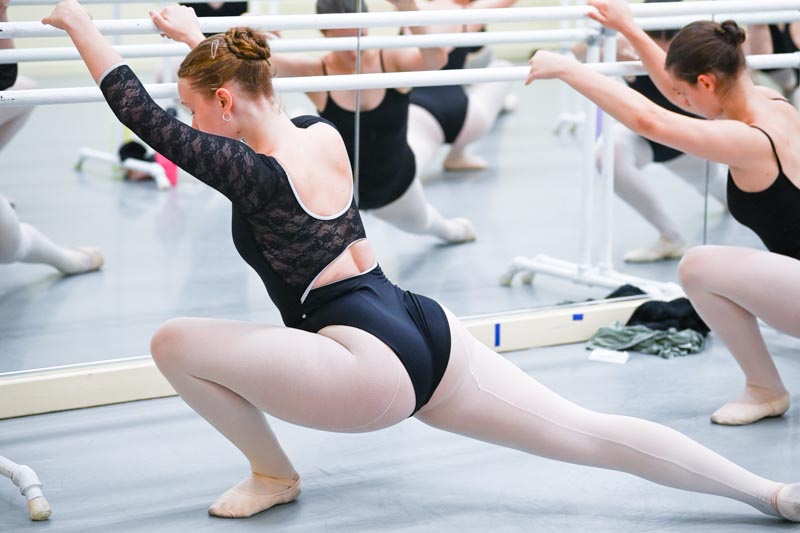
Over-splits may look impressive online, but they often place extreme stress on the hips, knees, and lower back. The ability to perform beautiful extensions and lines does not require dangerous overstretching.
Healthy flexibility focuses on:
- Alignment rather than height
- Control rather than extremes
- Strength through the full range of motion
- Protecting joints and growth plates
At SNHDT, our instructors emphasize safe stretching methods that support long-term technique—not trending contortion poses that increase injury risk.
4. Myth: “You Should Hold Stretches for Long Periods to Improve Flexibility.”
Long static stretches are not always the most effective way to improve flexibility for dancers, especially before class. Muscles respond better to a blend of dynamic warmups, active stretching, and shorter, well-aligned static holds performed when warm.
During class and rehearsals, dynamic mobility is far more important than passive range. A balanced combination of both leads to safe, consistent progress.
5. Myth: “Flexibility Alone Creates Beautiful Lines.”
Flexibility can enhance a dancer’s lines, but strength creates them.
Without turnout, stability, and control, flexibility alone cannot produce the clean, supported shapes dancers strive for. True artistry comes from combining mobility with:
- Core engagement
- Proper alignment
- Strong supporting muscles
- Technical awareness
Flexibility and strength are partners—not competitors.
Final Thoughts
Flexibility doesn’t need to be painful, extreme, or genetic. When dancers train with proper technique, strength, and patience, they develop a range of motion that supports their long-term health and elevates their artistry.
At Southern New Hampshire Dance Theater, our faculty teaches dancers to stretch with purpose, strengthen with intention, and move with confidence at every level.